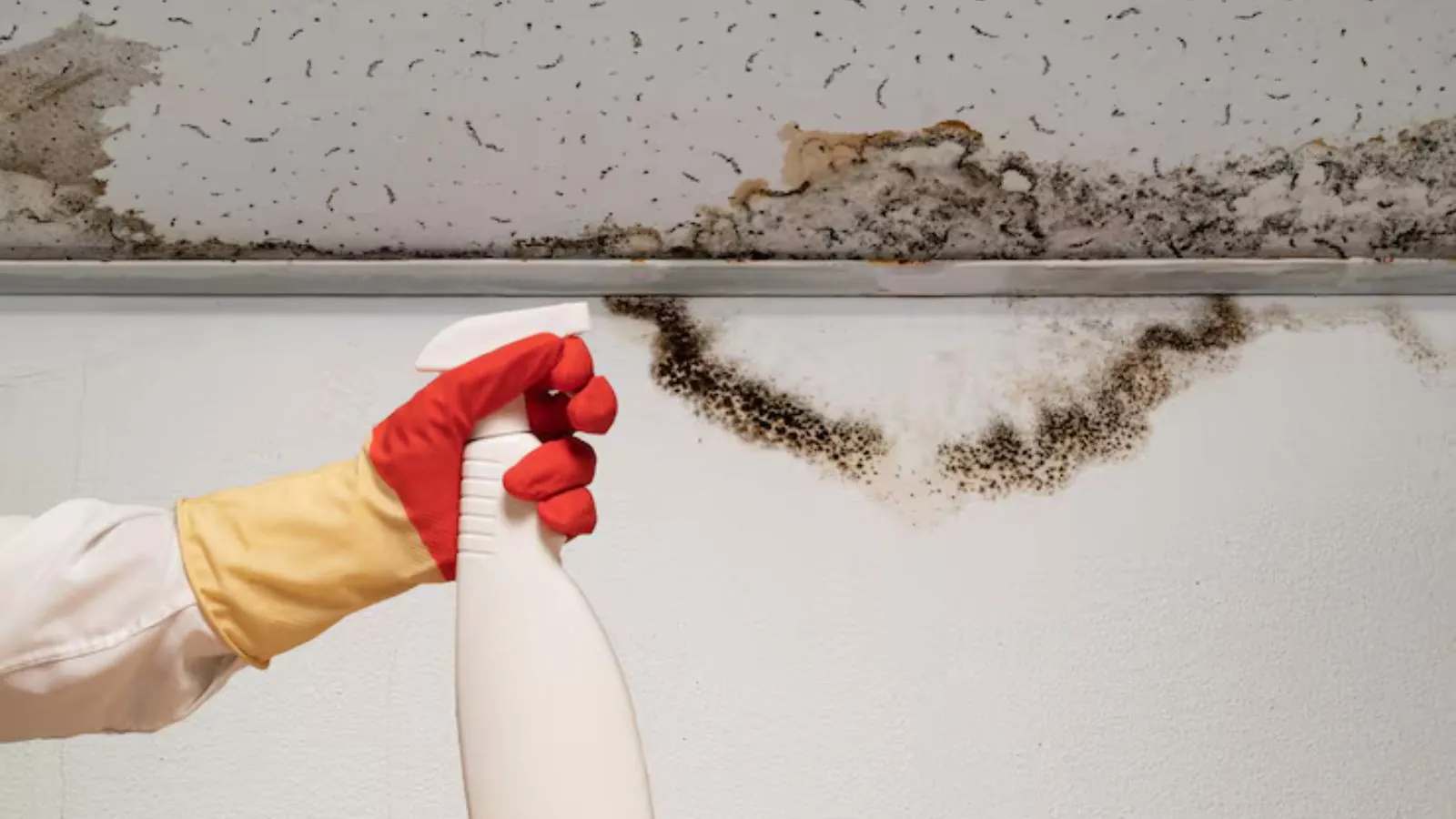
Dark spotting along shower caulk and grout is one of the most common things homeowners search for. In most cases it is surface growth feeding on soap film and moisture, and you can deal with it yourself. This guide explains how, and how to tell when the problem is larger than the surface.
A note on the name. Black mold is a description of color, not a species. Many common bathroom molds look black, and you cannot identify a type by eye. We make no health claims here. Questions about symptoms belong with a physician.
Cleaning surface mold from tile, grout and caulk
- 1
Ventilate
Open a window or run the exhaust fan. Wear gloves and eye protection.
- 2
Scrub hard surfaces
Use a bathroom cleaner or detergent and a stiff brush on tile and grout. Scrubbing matters more than the product.
- 3
Treat stains
A diluted bleach solution or a peroxide-based cleaner can lighten stains on grout. Never mix bleach with ammonia or other cleaners.
- 4
Rinse and dry
Rinse well, then dry the surfaces with a towel or squeegee.
- 5
Replace bad caulk
Mold that has grown into silicone caulk does not scrub out. Cut the old bead away, let the joint dry fully and apply new bathroom caulk.
Why it comes back
Mold needs moisture. A shower that stays wet for hours after use will grow it again however well you clean. The lasting fix is to dry the room faster.
Run the exhaust fan during the shower and for 20 to 30 minutes after. Squeegee the walls. Leave the door or curtain open so air moves. Fix a dripping shower head, and wash or replace the curtain liner.
Surface problem or hidden leak?
| What you notice | Likely meaning | What to do |
|---|---|---|
| Spots on caulk and grout only | Surface growth | Clean, recaulk, improve ventilation |
| Mold returns in days in one spot | That joint is letting water behind it | Recaulk, then watch |
| Loose, hollow or cracked tiles | Water has reached the backing | Get a moisture reading |
| Stain on the ceiling below the bathroom | Leak from the shower pan or drain | Stop using it and investigate |
| Musty smell with clean tile | Dampness inside the wall or floor | Get a moisture reading |
| Soft wall or swollen baseboard outside the shower | Water in the wall cavity | Professional assessment |
The last four rows are no longer about cleaning. Water behind tile soaks the wallboard and framing, and the mold you see is only the edge of it. A stain on the ceiling below is covered on our ceiling water damage repair page, since that is where a shower leak usually shows first.
What not to do
- Do not paint or caulk over mold. It grows through.
- Do not rely on bleach for wood or drywall. It does not reach into porous material.
- Do not sand or scrape dry mold, which spreads it.
- Do not ignore a bathroom fan that is noisy but moves no air. Hold a tissue to it to check.
When to bring in a professional
Call for an assessment when mold covers more than a small patch of wall or ceiling, when it is on drywall or wood, when it returns after proper cleaning, or when the signs point to a leak. Professional mold remediation starts by finding the moisture, then contains and removes affected material following the ANSI/IICRC S520 standard.
Check the fan before you blame the tile
A bath fan only helps if it moves air to the outdoors. Hold a single square of tissue up to the grille with the fan running. If the tissue is not pulled firmly against it, the fan is clogged, undersized or disconnected.
Look at where the duct ends as well. A fan that empties into the attic moves the moisture a few feet and leaves it on the roof framing, which is how a shower problem turns into an attic one.
Common questions
Is black mold in the shower dangerous?
We cannot give medical advice. Color does not identify the type of mold. If anyone in the home has health concerns, speak with a physician, and deal with the moisture either way.
Does Revere's humid coastal air make shower mold worse?
Humid outdoor air slows how fast a bathroom dries, especially in summer. A working exhaust fan vented outdoors matters more near the coast than opening a window on a damp day.
How often should caulk be replaced?
When it cracks, peels or stays stained after cleaning. Sound caulk keeps water out of the wall.
Still have a question about your own situation? Talk it through with the dispatcher at (833) 521-1033.