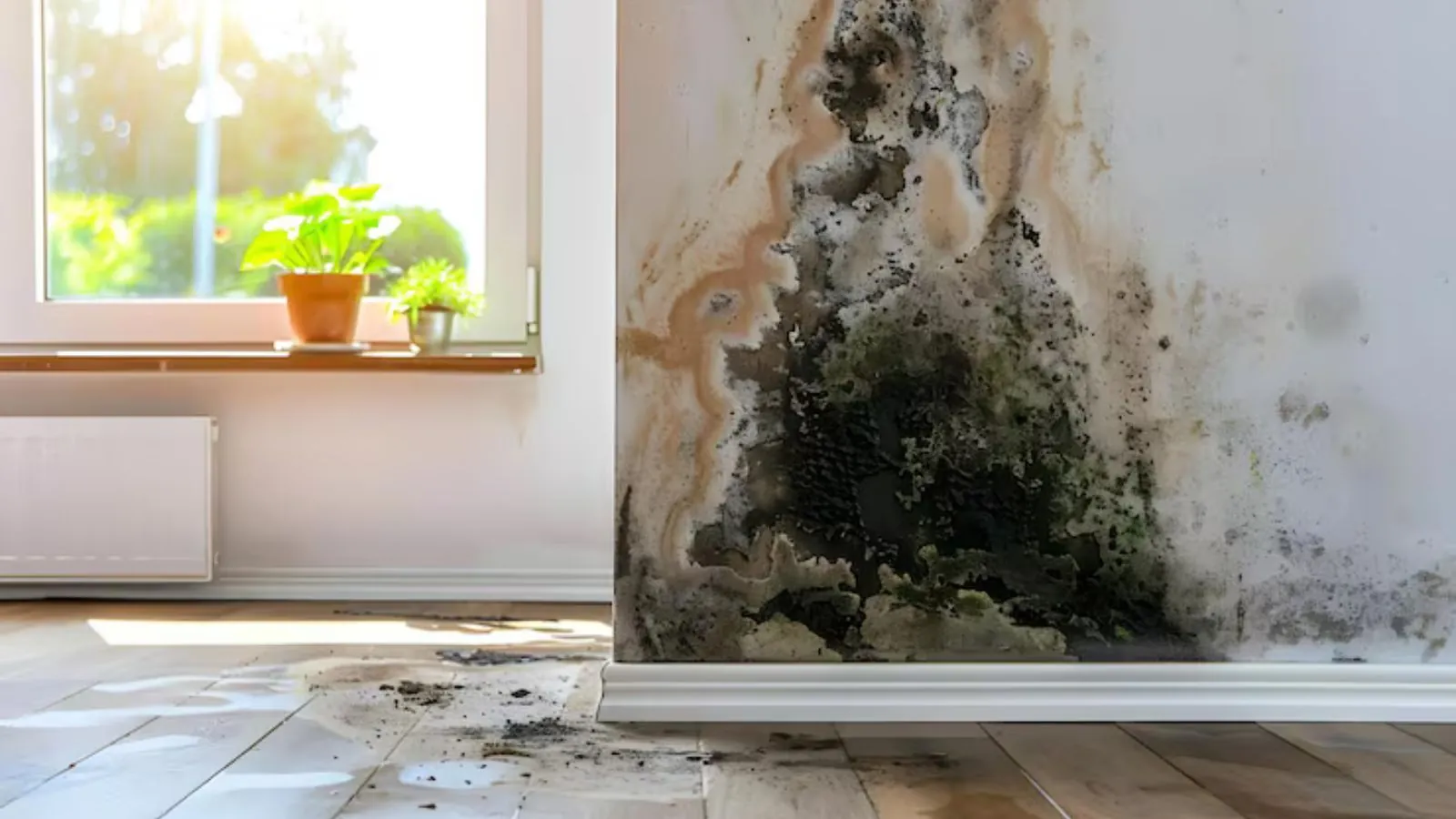
Mold remediation is the process of finding the moisture that allowed mold to grow, containing the affected area, removing contaminated materials and cleaning what remains. In Revere, MA homes it nearly always follows a water problem: a past leak, a damp basement or a bathroom with no real ventilation.
Mold needs moisture. Remove the growth without fixing the moisture and it comes back. Every job here therefore starts with the question of where the water came from.
Musty smell, dark spots, a stain that keeps returning
Most people do not start by looking for remediation. They notice a smell in a closet, black spotting on a bathroom ceiling, a patch behind a dresser on an outside wall, or growth under carpet they pulled up. Others find it while opening a wall during a remodel.
Those are the everyday signs of the problem the trade calls mold contamination, and remediation is the name for dealing with it properly. Callers most often link it to a recent leak: a toilet, a sink, an AC condensate line, a roof or siding.
Why mold is common in this area
Mold grows where materials stay damp, and Revere gives it opportunities. The city sits between Broad Sound and Rumney Marsh, basements in low areas take seepage, and the hazard mitigation plan documents repeated flooding in neighborhoods along the shore and the marsh. A basement that got wet and dried on its own is the classic starting point.
The Massachusetts Department of Public Health states that when porous materials get wet they must be dried in 24 to 48 hours or mold growth is likely. That is why fast structural drying after any leak is the least costly mold prevention there is.
Mold testing and inspection
An inspection is a visual and moisture survey: where the growth is, how far it extends, what is wet and why. Moisture meters and thermal imaging do most of the work. That survey produces the scope, and for visible mold it is usually all that is needed to plan the job.
Testing is a narrower tool. The Department of Public Health does not recommend mold testing as part of routine water damage remediation, and notes that no federal or state limits exist to compare results against. Testing has a place when growth is suspected but hidden, or when a third party needs documentation.
Clearance testing is the main example of that. After remediation, an independent assessor who did not do the work can inspect and sample to confirm the area is clean. If a buyer, lender or condo association asks for it, hire that assessor separately so the result is independent.
How remediation is done
- 1
Fix the moisture
The leak is repaired or the damp source dealt with. A plumber or roofer handles that part where needed.
- 2
Contain
Plastic sheeting and negative air pressure keep spores from moving into clean rooms. An air scrubber with a HEPA filter runs throughout.
- 3
Remove
Moldy drywall, insulation, carpet and pad are cut out, bagged inside the containment and taken away.
- 4
Clean
Framing and other solid surfaces are HEPA vacuumed, cleaned with a damp wipe or abrasive method, and vacuumed again.
- 5
Dry and verify
The area is dried to normal moisture readings and inspected. Independent clearance testing can follow if you want it.
The work follows ANSI/IICRC S520, the published standard for professional mold remediation. Ask any company you consider whether its crews work to S520, and ask whether your state licenses mold work.
Found mold and not sure how far it goes?
Call and describe the room, the smell and any past leak.
Small patch or professional job?
| Situation | Reasonable approach |
|---|---|
| Surface spotting on tile, tub caulk or a painted bathroom ceiling | Clean it, improve ventilation, watch for return |
| Mold on drywall, under carpet or on stored items after a leak | Professional assessment |
| Musty smell with no visible growth | Moisture inspection to find the damp material |
| Growth found inside a wall during remodeling | Stop work, contain, assess |
| Mold in a crawl space or on basement framing | Professional cleaning plus moisture control |
Buying, selling and lenders
A home inspector's note about mold can stall a sale, and callers describe lenders who will not fund until it is dealt with. We can remediate and document the work with photos and moisture readings. We cannot promise what a lender, inspector or buyer will accept. Ask them in advance what documentation they need, and plan on independent clearance testing if they require it.
What we do not claim
We make no health claims and give no medical advice. Questions about symptoms belong with a physician. We also cannot promise that mold will never return, because that depends on the building staying dry. What we can do is remove what is there and tell you plainly what caused it.
What not to do when you find mold
- Do not scrub, sand or scrape it dry.
- Do not run fans across it or run the heating or cooling system through that room if growth is near a vent.
- Do not paint or caulk over it.
- Do not tear out moldy drywall without containment, which spreads spores through the house.
- Do not ignore the moisture. Until the source is fixed, cleaning is temporary.
What affects the price
Scope and price are explained before work starts. Call (833) 521-1033.
Insurance note
Mold coverage varies a great deal. Some policies cover mold that results from a covered water loss, often with a dollar cap, and exclude mold from long-term moisture. Check your policy and ask your insurer. Our basement water damage page explains the seepage exclusions that often sit behind basement mold.
Mold questions from Revere homeowners
I pulled up the carpet and found mold. What now?
Leave it in place, keep the room closed and avoid running fans across it. Carpet with mold on the backing is removed under containment, and the floor and wall beside it are checked.
Why does my closet smell musty?
A closet on an outside wall, beside a bathroom or next to an air handler often has a damp wall behind it. Our AC leak water damage page covers one frequent cause.
Do I need a mold test first?
Usually not when mold is visible. The state health department does not recommend testing for routine cases. An inspection that finds the moisture is more useful.
Is mold remediation an emergency?
Rarely. It is planned work. If there is an active leak feeding it, stop the water and call the 24/7 line.
The buyer's lender wants mold removed before closing. Can you help?
We can remediate and document it. Ask the lender what proof they need, and arrange independent clearance testing if required. We cannot speak for the lender's decision.
Will bleach kill it?
Bleach can clean hard, non-porous surfaces. It does not solve mold in drywall, wood or carpet, and it does nothing about the moisture.
Do you serve nearby towns?
Mold remediation is offered in Revere. For water damage we also cover Malden, Saugus, Melrose and Lynn, and the Lynn page has details.
Still have a question about your own situation? Talk it through with the dispatcher at (833) 521-1033.