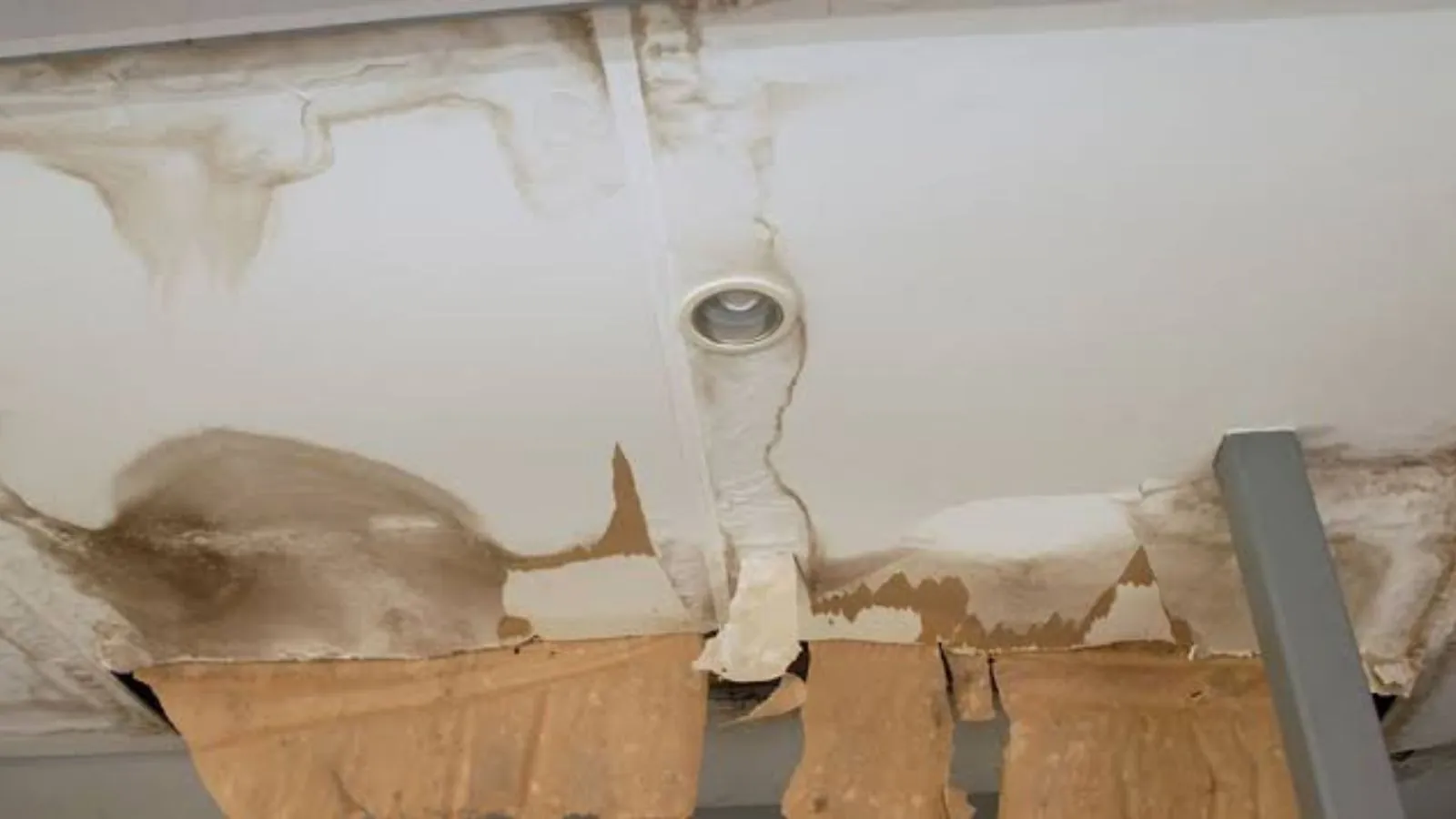
Wall and drywall water damage repair deals with the vertical surfaces: drywall or plaster, the insulation and framing behind it and the baseboard at the bottom. In Revere, MA homes a wet wall usually has a source on the other side, a bathroom, a kitchen, a failed piece of siding or a pipe inside the cavity.
A wall rarely fails dramatically. It stains, softens, bubbles its paint or lets the baseboard swell. Each of those is worth a moisture reading before any patching.
Signs a wall is holding water
- A soft spot you can press in with a thumb, or a hole starting to form.
- Paint bubbling or peeling in one area.
- A tide line or brown stain, often rising from the floor.
- Baseboards swollen, split at the joints or pulling off the wall.
- A musty smell near one wall or inside a closet.
- Wallpaper lifting at the seams.
Where wall water comes from
| Wall location | Common source | Clue |
|---|---|---|
| Behind a bathroom | Shower valve, tub drain, toilet supply | Worse after bathing |
| Kitchen wall | Sink or dishwasher plumbing, siding leak outside | Stain low behind cabinets |
| Exterior wall | Failed siding, flashing or window seal | Worse after wind-driven rain |
| Garage or basement wall | Water heater, laundry, seepage | Damage at the bottom edge |
| Any wall, sudden | Pipe in the cavity | Water meter moves with taps off |
The source has to be found and stopped. Patching a wall that is still getting wet wastes the repair, and the new patch will stain like the old one.
Plaster and drywall behave differently
Revere's housing spans more than a century. Older homes commonly have plaster on wood lath, and newer or remodeled ones have paper-faced drywall. Plaster tolerates a brief wetting and often dries hard again, though the lath behind it can hold water and the keys can loosen. Drywall wicks water upward, loses strength and grows mold on its paper quickly.
Exterior walls here face real weather. Wind-driven rain off Broad Sound finds gaps in older siding and around windows, and the wall can be wet inside long before a stain shows. If a storm opened the wall, the storm water damage page applies.
Dry it or cut it out?
| Condition | Usual approach | Trade-off |
|---|---|---|
| Clean water, wet under two days, drywall still firm | Dry in place with baseboards off and holes behind them | Least disruption. Needs meter confirmation |
| Insulated wall, insulation wet | Flood cut to remove wet drywall and insulation | More repair, nothing left wet inside |
| Drywall soft, sagging or moldy | Remove and replace | Only sound fix |
| Contaminated water touched the wall | Remove above the water line | Required for sanitation |
| Plaster, firm and well keyed | Dry in place, repaint | Slower drying, keeps original wall |
How wall repair is done
- 1
Meter the wall
Pin and pinless meters map how high and how wide the moisture goes. A thermal camera checks the neighboring bays.
- 2
Remove baseboards
Trim comes off so the bottom of the wall can breathe.
- 3
Dry or cut
Either air is injected into the cavity, or a straight flood cut is made a little above the wet line and the wet material removed.
- 4
Dry the framing
Air movers and an LGR dehumidifier dry studs and plates to a normal reading.
- 5
Rebuild
Insulation, drywall, tape, three coats of compound, primer and paint. Baseboards are reinstalled or replaced.
Want to know how wet the wall is?
Call and we will explain the moisture check.
Related damage to check
Wall water rarely stays in the wall. It runs down to the floor, so carpet or wood flooring along that wall is checked too. If the source is above, the ceiling is metered as part of the same visit. Where mold is found during opening, the work pauses and follows the steps on the mold remediation page.
What not to do with a wet wall
- Do not use outlets or switches on the wet section.
- Do not paint, caulk or patch until a meter shows it is dry.
- Do not cut into walls in a house built before the 1980s without asking about lead paint and asbestos first.
- Do not push furniture back against the wall while it is drying.
Whether a wall is dried in place or cut is decided under ANSI/IICRC S500, using the category of water and the readings in the cavity.
What affects the price
Scope and price are explained before work starts. Call (833) 521-1033.
Permits and insurance
Drying needs no permit. For larger rebuilds, the Revere Building Division requires a permit before a structure is altered, so ask at 781-286-8196 if walls are being reframed or wiring replaced.
On insurance, sudden leaks are often covered and long-term seepage often is not. Ask your insurer, and keep dated photos of the wall as you found it.
Wall and drywall questions
Does wet drywall always need replacing?
No. Drywall wet with clean water for a short time, and still firm, can often be dried. A meter decides it.
Is a wet wall an emergency?
Not usually. If water is actively running inside the wall, close the main valve and call the 24/7 line.
How high do you cut?
A little above where the meter stops reading wet. Cuts are kept straight and at a consistent height to make repair cleaner.
Siding leaked into my kitchen wall. Do you fix siding?
No. A siding contractor repairs the outside. We dry and rebuild the inside.
Do you serve Oak Island?
Yes. In Oak Island and across Revere, plus Malden, Saugus, Melrose and Lynn.
Still have a question about your own situation? Talk it through with the dispatcher at (833) 521-1033.