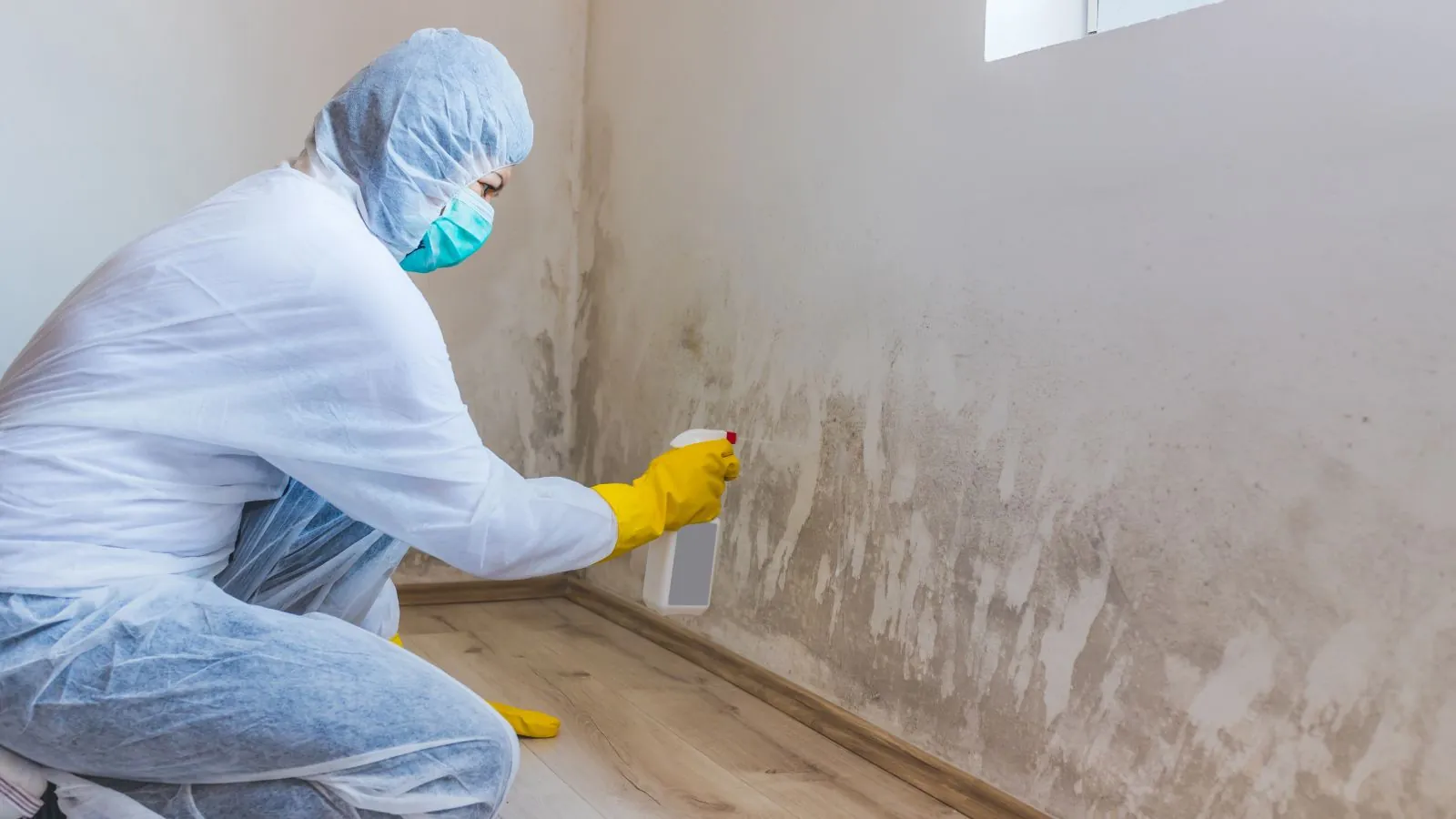
People use the two words interchangeably, and scientifically mildew is a kind of mold. In everyday use the distinction is still useful, because it separates a cleaning job from a building problem.
This guide gives you a practical way to tell them apart and decide what to do. It makes no health claims. For health concerns, speak with a physician.
The quick comparison
| Feature | Mildew | Mold |
|---|---|---|
| Appearance | Flat, powdery or downy | Fuzzy, slimy or blotchy, sometimes raised |
| Color | White, gray or light yellow, darkening with age | Black, green, brown, sometimes other colors |
| Where it grows | On the surface of damp things | Into the material, as well as on it |
| Common places | Shower walls, window sills, damp fabric | Drywall, wood, carpet, insulation, ceilings |
| Wipes off? | Usually, with a cleaner | Surface may wipe, staining and growth remain inside |
| What it means | The surface stays humid | The material itself has been wet |
A simple test
Wipe a small area with a damp cloth and household cleaner. If it comes away cleanly and the surface underneath is sound, hard and unstained, you are most likely dealing with mildew or light surface mold.
If the stain goes into the material, if the surface is soft or damaged, or if the growth returns in the same spot after cleaning, treat it as mold in the material. At that point the question is why the material is wet.
Where each one turns up
Mildew likes humid surfaces. You find it on shower tile and curtains, on window frames where condensation runs, on clothes or towels left damp, and on the north-facing side of painted trim.
Mold in building materials follows water. It appears on drywall after a leak, on the underside of carpet that got wet, on basement framing, on the back of furniture pushed against a cold outside wall and above ceilings where a roof or pipe has leaked.
Cleaning mildew
- 1
Ventilate and protect
Open a window or run a fan. Wear gloves.
- 2
Scrub
Use a household cleaner or detergent with a brush or sponge.
- 3
Rinse and dry
Rinse, then dry the surface fully.
- 4
Prevent
Lower the humidity: run the bath fan, wipe condensation, keep furniture a little off outside walls.
Never mix bleach with ammonia or other cleaners, and do not dry-brush growth, which spreads it.
When it is mold in the material
- Do not scrub or sand drywall or wood with growth in it.
- Do not paint over it.
- Find the moisture: a leak, condensation or damp from below.
- For anything beyond a small patch, have it assessed.
Porous materials with mold growing in them are removed, not cleaned, and the work is contained so spores do not spread, following the ANSI/IICRC S520 standard. That process is set out on our mold remediation page.
If the growth is along the base of a wall, the wall has usually been wet from the floor up. Our wall and drywall water damage page explains how the extent is measured.
Why the difference matters
It matters for effort and for cost. Mildew is solved with cleaning and ventilation. Mold in materials is solved by fixing a water problem, and leaving it means the damage continues behind the surface.
It can matter for insurance and property sales too, where mold in a wall is a finding and mildew on a shower is not.
Keeping both away
- Keep indoor humidity moderate. A basic hygrometer shows the level.
- Vent bathrooms, kitchens and dryers to the outdoors.
- Run a dehumidifier in a damp basement and empty it or plumb it to a drain.
- Fix leaks promptly and dry wet materials in the first day or two.
- Leave a gap between furniture and outside walls so air can move.
Common questions
Is mildew just early mold?
Mildew is a surface-growing type of mold. Left on a damp surface it persists and stains, and the same damp conditions can allow other molds to grow into nearby materials.
Why does my Revere basement smell musty every summer?
Warm humid air meets cool basement walls and floors and leaves moisture behind. A dehumidifier and keeping cardboard and fabric off the floor usually help. A smell that persists may mean damp material that needs a moisture check.
Does bleach kill mold?
It can disinfect hard, non-porous surfaces. It does not penetrate drywall or wood, so it does not solve mold in those materials.
Should I test to find out which it is?
No test is needed to choose a response. If it wipes off a hard surface, clean it. If it is in the material, find the moisture.
Still have a question about your own situation? Talk it through with the dispatcher at (833) 521-1033.