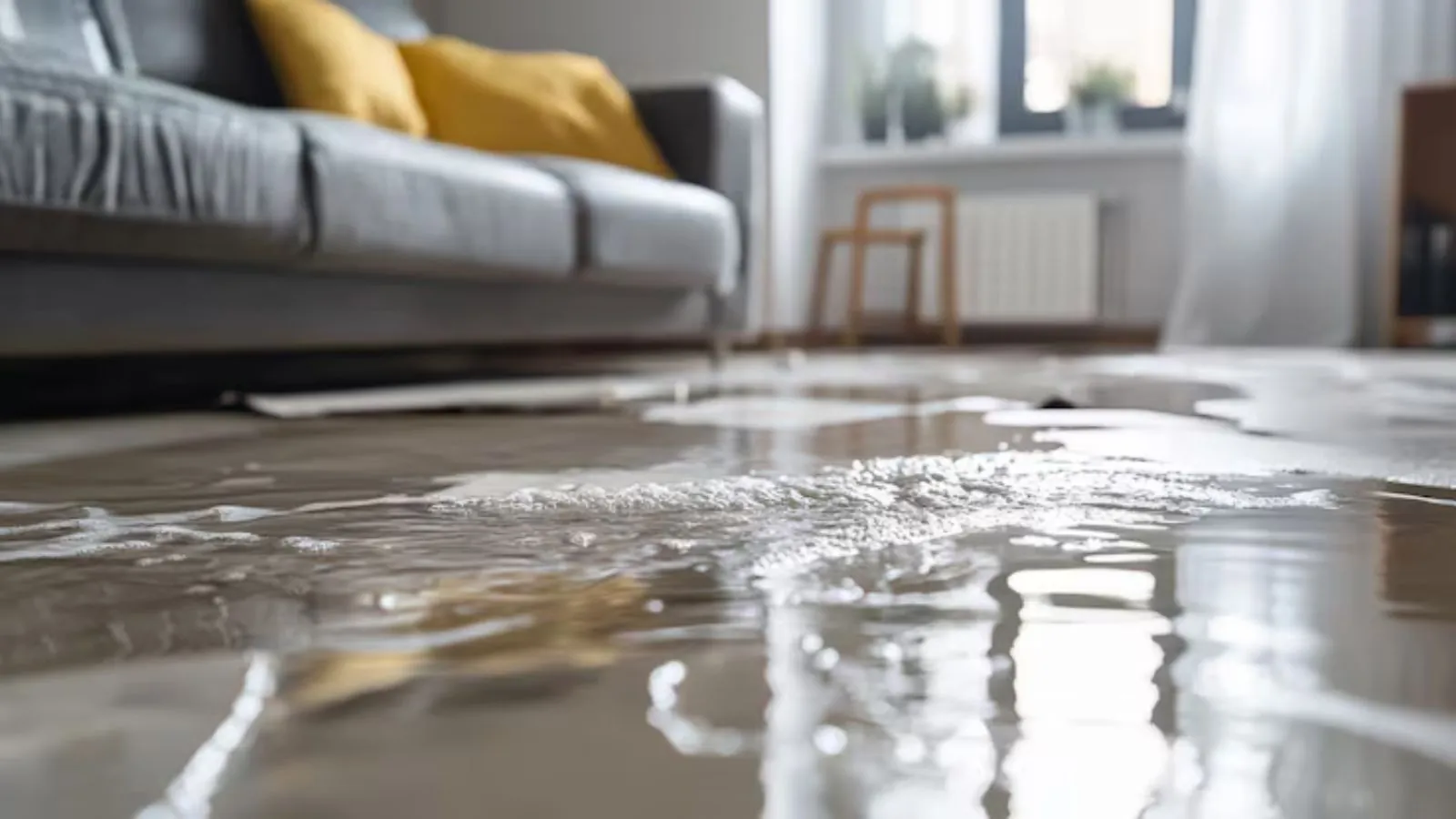
A leak that would be caught in five minutes when you are home can run for days when you are not. The amount of damage depends far more on how long the water runs than on the size of the failure. That makes a short trip one of the riskier times for a house.
The good news is that the main precaution takes thirty seconds. This checklist covers that and the rest.
The one step that matters most
Turn off the main water valve before you leave. With the supply closed, a failed hose or split pipe can release only the water already in the lines, a few gallons, not hundreds.
After closing it, open a tap briefly to confirm the flow stops. If your valve is stiff, corroded or does not close fully, have a plumber replace it before your next trip. A valve you cannot turn is no use in an emergency either.
Pre-trip checklist
Water
- Close the main shutoff, or at least the valves to the washing machine, dishwasher and ice maker.
- Set the water heater to vacation or pilot mode if the main is off.
- Do not start the dishwasher or washer as you walk out of the door.
- Check under sinks and around toilets for any drip you have been ignoring.
Heat, in the cold months
- Leave the heat on. Do not set the thermostat lower than about 55 degrees Fahrenheit.
- Open cabinet doors under sinks on outside walls so warm air reaches the pipes.
- Shut off and drain outdoor faucets from the inside valve.
- Make sure the fuel tank is full or the delivery is scheduled.
Outside and below
- Clear gutters and downspouts, and confirm they discharge away from the foundation.
- Test the sump pump by pouring water into the pit.
- Move valuables and cardboard boxes off the basement floor.
- Close and lock windows, including basement windows.
People and technology
- Ask a neighbor or friend to walk through every two or three days, including the basement.
- Show them where the main shutoff is and leave a phone number for emergencies.
- Consider leak sensors by the water heater, washer and sinks. Some send phone alerts.
- Consider an automatic shutoff valve that closes when it detects unusual flow.
How long is too long to leave a house?
| Time away | Sensible precautions |
|---|---|
| A weekend | Main water off, heat on, quick check under sinks |
| One to two weeks | All of the above, plus a person checking in and the water heater on vacation mode |
| A month or more | All of the above, plus tell your insurer, and consider having the plumbing winterized in cold months |
What can go wrong, and how fast
Washing machine hoses, toilet supply lines and ice maker tubing are small parts under constant pressure. When one fails it releases water continuously until someone shuts it off. Over a long weekend that is enough to soak floors, ceilings and walls across several rooms.
In winter the risk is a freeze. If the heat fails while you are away, pipes in outside walls can freeze and split, and the flood begins when things thaw. Our frozen pipe water damage page explains that sequence and why empty homes are hit hardest.
If you come home to water
- 1
Stay safe
Do not walk into standing water if it may have reached outlets or the electrical panel.
- 2
Shut off the water
Close the main valve.
- 3
Document
Photograph everything before moving it.
- 4
Call for help
Emergency water extraction removes standing water and starts drying. Then call your insurer.
- 5
Do not wait
Water that has sat for days may already be growing mold. Speed still matters.
Check your insurance before a long absence
Policies often contain conditions about heating and occupancy. If the house will be empty for an extended period, ask your agent what is required to keep water damage coverage in force and get the answer in writing.
Common questions
Should I turn off the water when I go on vacation?
Yes. Closing the main valve is the most effective single step. It limits any leak to the water already in the pipes.
I own a seasonal place near Revere Beach. Should the heat stay on all winter?
Either keep it heated and checked regularly, or have a plumber winterize the plumbing fully. Ask your insurer which they require, since vacancy affects coverage.
Do I need to turn off the water heater too?
If the main is off, set it to vacation or pilot mode so it is not heating an unused tank.
Are leak sensors worth it?
Simple sensors are inexpensive and give early warning. An automatic shutoff valve goes further by stopping the flow.
Still have a question about your own situation? Talk it through with the dispatcher at (833) 521-1033.