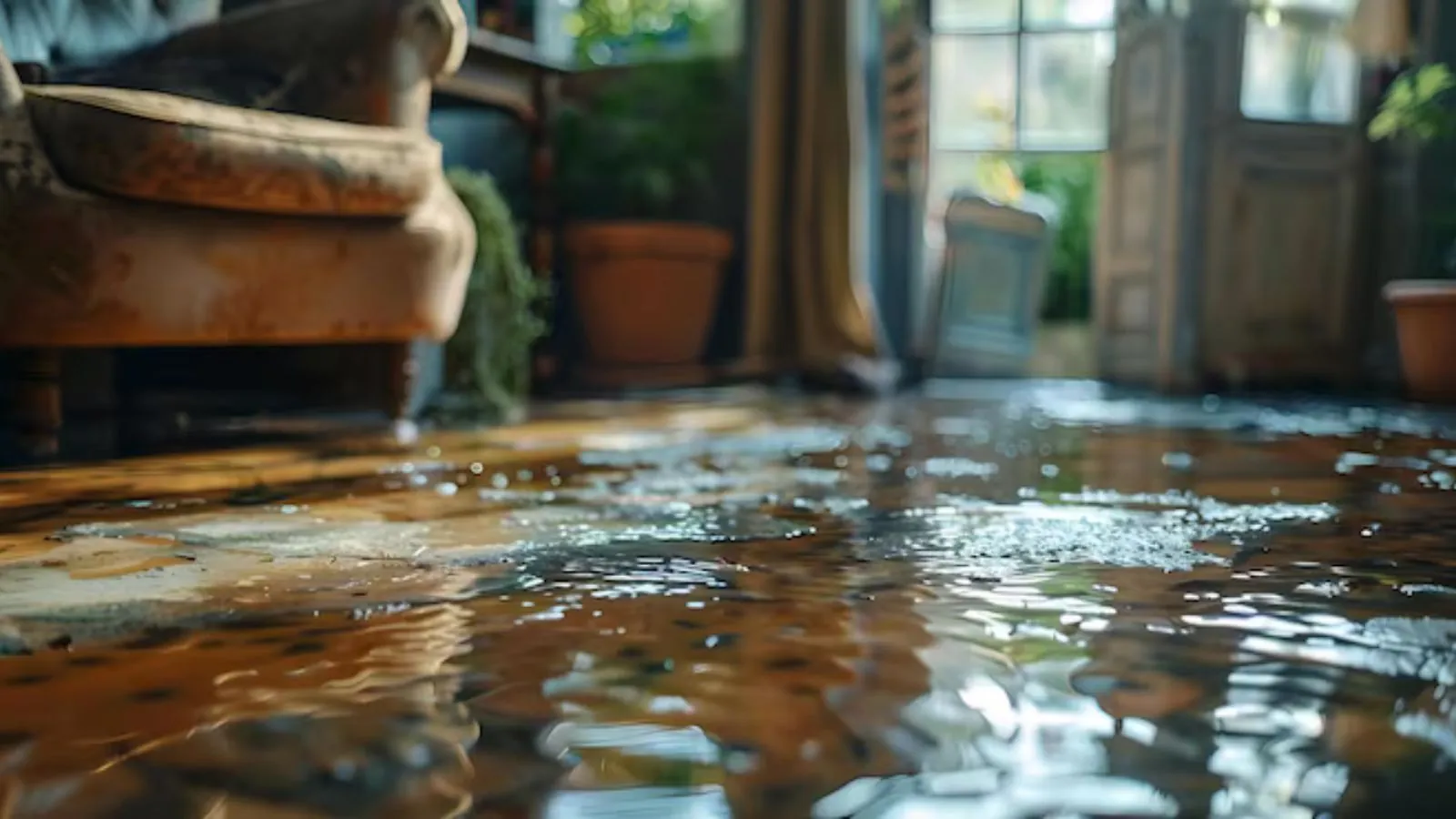
People use several words for the same work: remediation, mitigation, restoration. In practice the water damage remediation process has a fixed order, and each stage has a reason. Knowing the order helps you judge whether a job in your home is being done properly.
This is an explainer, not a sales page. It describes the sequence set out in ANSI/IICRC S500, the published industry standard for water damage restoration.
Stage 1: Assessment
The first task is to answer three questions. Where did the water come from, is it still coming, and how clean is it? The answers set the safety precautions and decide what can be saved.
A technician then measures. Moisture meters read drywall, wood and concrete. A thermal imaging camera shows cool, damp areas behind finished surfaces. The readings are marked on a sketch of the rooms, which becomes the baseline.
Stage 2: Water removal
Standing water is pumped or vacuumed out. This stage does the most good in the least time, because liquid water is far easier to remove than water that has soaked in. A carpeted room can release many gallons in an hour of extraction and would take days to give up the same amount by evaporation.
The details of pumps and extraction tools are on our water extraction page.
Stage 3: Removing what cannot dry
Some materials are removed on purpose. Wet insulation, swollen particleboard and carpet pad hold water against the structure and seldom dry in place. Anything porous that touched contaminated water is removed for sanitation.
Good practice removes as little as necessary. Baseboards come off, and small openings are made behind them, so that wall cavities can dry without taking down whole walls.
Stage 4: Drying
Air movers push dry air across wet surfaces to speed evaporation. Dehumidifiers pull that moisture out of the air so evaporation can continue. The two are sized to the space, and the room is usually kept closed so the equipment is not fighting outdoor humidity.
This stage takes days. Three to five is typical for a clean-water loss caught early. Hardwood, plaster and concrete take longer. The equipment and the reasoning behind it are covered on our structural drying and dehumidification page.
Stage 5: Monitoring
A technician returns to take new readings, compare them with the baseline and adjust the equipment. Monitoring is how the job knows when to stop. Drying by the calendar, without readings, risks either closing up a wet wall or running equipment longer than needed.
Stage 6: Cleaning and repair
Once materials reach a dry standard, surfaces are cleaned and the rebuild begins: insulation, drywall, flooring, trim and paint. Repairs done before the structure is dry tend to fail, which is why this stage comes last.
The timeline at a glance
| Stage | Typical timing | What you should see |
|---|---|---|
| Assessment | First visit | Meter readings and a written scope |
| Water removal | First visit | No standing water left |
| Selective removal | Day 1 or 2 | Wet pad, insulation or damaged drywall taken out |
| Drying | Days 1 to 5 or more | Equipment running continuously |
| Monitoring | Every day or two | Readings going down, equipment repositioned |
| Repair | After dry standard is met | Walls and floors put back |
Questions worth asking any company
- Do your crews work to ANSI/IICRC S500?
- Will I see the moisture readings at the start and the end?
- What is the dry target for my materials, and how was it set?
- What are you removing, and why can it not be dried?
- Is the scope and price explained before work begins?
Why two similar jobs get different equipment
Homeowners sometimes compare notes with a neighbor and wonder why one job had four air movers and the other had ten. The number is calculated, not guessed. It depends on the square footage that is wet, how many walls are affected and how absorbent the materials are.
Dehumidifier capacity is worked out from the volume of the space and how much water has to be removed. A job with too little equipment dries slowly and risks mold. A job with far too much runs up cost and electricity for no benefit.
Common questions
What is the difference between mitigation, remediation and restoration?
Mitigation and remediation refer to stopping the damage and drying the building. Restoration usually includes the rebuild afterward. Companies use the words loosely, so ask what a quote includes.
Does humid weather near Revere Beach slow down drying?
It can. Humid outdoor air makes dehumidifiers work harder, which is why drying spaces are normally kept closed during the job.
Can I stay in the house during drying?
Usually yes for clean-water losses. The equipment is noisy and warm. Contaminated water losses may need the affected area closed off.
Still have a question about your own situation? Talk it through with the dispatcher at (833) 521-1033.